
Elected officials’ response to COVID-19 fuels students’ political activism

By David Baskind
Student Correspondent
Historically, when something major has affected young people directly, it has increased their political activism: the Vietnam War, 9/11, Katrina, mass school shootings and now - the coronavirus pandemic.
Several students at Millsaps College, frustrated with the U.S. government’s response to the pandemic, have been galvanized into political action.
“The executive office has been absolutely deplorable during this pandemic. The president’s message is inconsistent,” said Jacob Detiege, a graduating political science major at Millsaps. The 21-year-old is more politically engaged than most students his age.
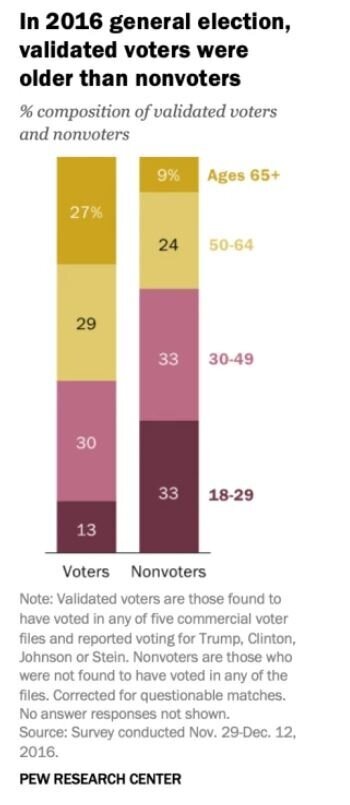
“Older Americans traditionally turn out to vote at higher rates than younger adults,” according to the Pew Research Center. In the 2016 presidential election, data from Pew show that about 27 percent of voters were ages 65 and older while 13 percent of voters were between the ages of 18 and 29.
However, results from recent elections suggest that more youths nationwide are becoming more politically active. If this trend continues, researchers at the Center for Information and Research on Civic Learning & Engagement (CIRCLE), say the youth vote could decide the 2020 presidential election, so “candidates and campaigns ignore young people at their peril.”
“I’ll be voting in November because it does matter,” said Detiege, who is angered by President Donald Trump’s flippant response to the pandemic. “A president is more than just (a policymaker). We look towards the office during times of crisis.” Detiege added that the president is not a medical expert so “his medical advice is dangerous.”
Detiege suggested that Americans should look to Hurricane Katrina as an example of crisis response. The federal government needs to be the principal actor in a massive crisis.
Wesley Douget, a 20-year-old biology major, is also not happy with the way the government has dealt with the coronavirus crisis. “I feel both the states and federal government were unprepared for a global pandemic, so their handling of it has been highly mixed.”
One of the major problems with America’s response to the pandemic is the apparent notion that Americans do not need anybody, said Macy Richardson, a 20-year-old junior classics major.
“I think if (Trump) hadn’t acted like it was not bad, people would have taken it seriously. But, also I think it is also due to Americans’ (individualistic) mentality that this can’t touch me, I’m American,” said Richardson, who is also incensed by how poorly the president has managed the crisis. “Of course I’ll still vote. If anything it’s only made me want to vote more seeing as how (Trump) has handled this.”
.JPG)
Prior to the outbreak, seven-in-ten Gen Zers - those born after 1997 - said in a 2018 Pew survey published Jan. 17, 2019, that the “government should do more to solve problems in this country, while just 29% say the government is doing too many things that are better left to individuals and businesses.” The data was based on surveys that were conducted in 2018 of U.S. adults ages 18 and older and U.S. teens ages 13 to 17.
The nonstop media coverage of the pandemic has had an opposite effect on 19-year-old Michael Stack, a neuroscience major who admits he is burnt out by it all. “Actually, I sort of steered away from (politics) because one, I guess I’m tired of listening to the news and, two, I don’t know but I feel like politics right now aren’t really talking about anything but the virus.”
Millsaps Political Science Professor Nathan Shrader was happy to learn that some Millsaps students have become more politically engaged as a result of the pandemic, and he hopes they will turn their frustration into action by voting in the upcoming presidential election in November.
After the massacre on Valentine’s Day at Marjory Stoneman Douglas High School in Parkland, Florida, in 2018, grief-stricken students who lost their friends in the tragedy turned their anger at the government for not having adequate gun-control laws into action. The high school students became political activists and established a wide-ranging grassroots campaign to reform the nation’s gun laws.
The Parkland students’ activism shows the importance of youth participation in the political process. Researchers at CIRCLE pointed out that “broadening youth voting is one of the vital tasks in strengthening democracy.”
Dakota Henderson, a 20-year-old Millsaps business major, said if there is a silver lining in all of this, it is that young people have become more aware of the impact that elections can have on our daily lives, and that is important “because you never know when something like this will happen again.”
Students interested in registering to vote, can go to the following website: https://www.dosomething.org/us/campaigns/online-registration-drive
This story was produced by MCIR's Journalism Lab at Millsaps College, part of a public service project initiated by Report for American and the Mississippi Center for Investigative Reporting, nonprofit news organizations dedicated to community journalism and empowering Mississippians in their communities through the use of investigative journalism. MCIR Investigative Reporter and Report for America corps member Shirley L. Smith is the lab instructor.
Sign up for our newsletter. The COVID-19 virus is moving rapidly. We will continue to investigate Mississippi's handling of this pandemic as well as sharing what kinds of steps you can take.