
Pandemic plays havoc with students’ future plans

By Magill Grunfeld
Student Correspondent
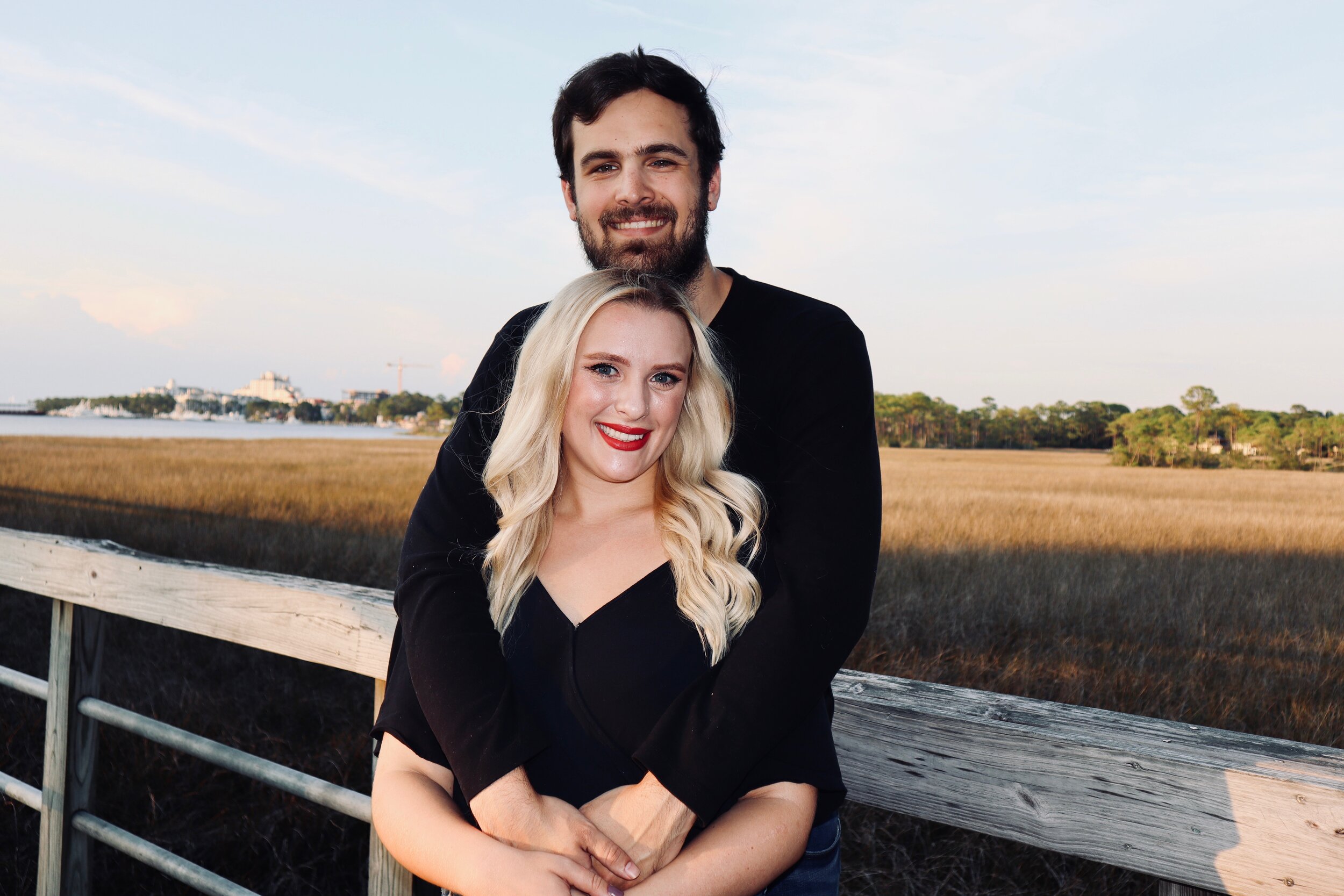
Graduating seniors Sarah Lawson and Stuart Leblanc, posing here on a boardwalk, had their carefully mapped out futures upended by a pandemic. They recently moved in the middle of a pandemic to Denver to attend graduate school.
Photo by Joy Kate Lawson
Sarah Lawson, a biology major at Millsaps College, had no idea when she left for spring break on March 6 that it would be the last time she would ever step foot on campus.
Lawson and her boyfriend, Stuart Leblanc, an economics major, had their futures mapped out. However, their lives were upended in late March when Millsaps closed due to the COVID-19 pandemic, and they were forced to finish their senior year remotely without any fanfare for their four years of hard work.
“When you have a warning of what's coming, you get to cherish every moment, but we didn't get that. I worked three jobs at school to support myself and now I am without a job, packing up to move and not getting any help from the government,” Lawson said in April.
Lawson and Leblanc, who lost his off-campus job at a law firm, are among 161 seniors at the private liberal arts college in Jackson who are now worried about their future, as they are facing one of the worst job markets in our nation’s history.
“I’m not going to get any money from Trump’s stimulus package, because my parents still claim me as a dependent,” a frustrated Lawson said.
Congress passed a $2 trillion stimulus bill, which was signed by President Donald Trump on March 27. The legislation titled, the Coronavirus Aid, Relief and Economic Security Act (CARES), provides American workers, families and small businesses with economic assistance to help them during this unprecedented crisis. However, most college students, like Lawson and Leblanc who have to work to help finance their education but are still claimed as dependents by their parents, were left out of the stimulus package.
According to a 2015 report by Georgetown University, “About 40 percent of undergraduates and 76 percent of graduate students (in America) work at least 30 hours a week.”
Lawson and Leblanc said losing their jobs has put a financial strain on them because they were relying on that income to help them relocate to their new apartment across the country.
The young couple recently moved to Denver, Colorado, to attend graduate school. Despite their concern about moving in the middle of a pandemic, Lawson says that they had no other option, explaining that their apartment lease in Jackson expired in April and they did not want to go back home for fear of possibly putting their parents at risk or contracting the virus themselves.
Lawson’s father is a cardiologist, and Leblanc’s mother is immunocompromised, which puts them at a greater risk for contracting COVID-19.
Isabel Curie, an art history major who recently graduated as well, also lost one of her jobs after Millsaps closed the campus. Fortunately, she still has her off-campus restaurant job and has been able to pick up extra shifts to help make up for lost income. While Curie knows this increases her risk for contracting the deadly virus, she said she cannot afford to stop working.
Curie said the last few weeks of her senior year was very stressful, as she tried to juggle working 30 hours per week along with maintaining her schoolwork. Now that she has technically graduated, she is dealing with a new level of stress, because she needs to find a permanent job and a place to live.
“I have a lot going on and I’m not really sure what I’m doing because I’ve been thrown out into the real world a lot sooner than expected,” Curie said, adding that she has not been able to see her mother who is staying in Columbus, Mississippi, which is three hours away from their home in Jackson.
“I haven’t seen my mother in over a month,” she said. “She isn’t comfortable coming home because I’ve been working and interacting with people we don’t know.”
Having to go through all this alone, has been emotionally draining for Curie. Luckily, she has family living next door that she can see from a distance, but she said, “I miss human interaction and touch. I just want to hug my mom.”
“I don’t mind going into work, I just don’t like having to do everything alone. I have so many things on my plate that it’s overwhelming. It would be nice to have someone help take that weight off of my shoulders,” she added.
Even though Curie will receive her diploma, she is extremely disappointed that she did not get to participate in a graduation ceremony and in all of the customary senior events. “It’s like when you’re towards the end of a really good book and you have a feeling of how it’s going to end, but someone yanks the book away once you reach the last chapter.”
This story was produced by MCIR's Journalism Lab at Millsaps College, part of a public service project initiated by Report for American and the Mississippi Center for Investigative Reporting, nonprofit news organizations dedicated to community journalism and empowering Mississippians in their communities through the use of investigative journalism. MCIR Investigative Reporter and Report for America corps member Shirley L. Smith is the lab instructor.
Sign up for our newsletter. The COVID-19 virus is moving rapidly. We will continue to investigate Mississippi's handling of this pandemic as well as sharing what kinds of steps you can take.