
How the 2021 Violence Against Women Act Will Help Take Guns From Abusers Guilty of Domestic Violence

As Pheonecia Ratliff’s story shows, the main threat to victims of domestic violence is the prevalence of guns. Once her abusive ex-boyfriend bonded out of jail in Canton in May 2020, he could have gotten one from a friend or relative.
There are more than 434 million firearms in the United States, outnumbering people. In general, 2020 was the deadliest year in terms of gun violence for several decades, and 2021 is expected to be even worse.
Firearms are very popular in Mississippi, thanks to widespread hunting. The Centers for Disease Control and Prevention, which calls domestic violence a threat to public health, has said “women and children are at especially high risk because of Mississippi’s rampant gun violence.” Mississippians die from gunfire at almost twice the national average, and at almost twice the number of other forms of homicide or drug overdoses. According to the U.S. Department of Justice, women whose partners keep firearms at home are five times more likely to be shot and killed.
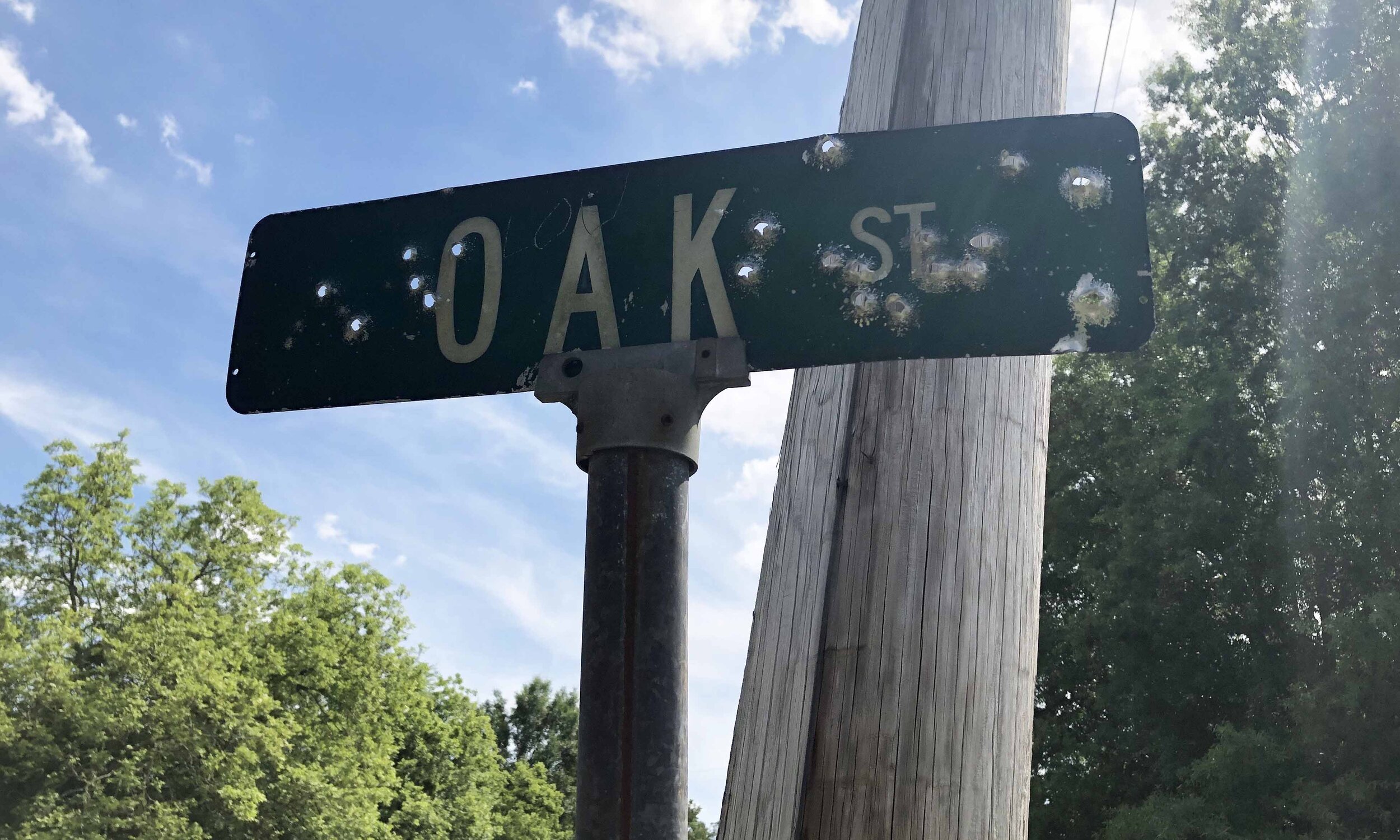
Phoenicia Ratliff lived on this street in Canton, where she was abducted by her ex-boyfriend and later killed in a murder-suicide. Ann Marie Cunningham/MCIR
Bonnie Carlson, J.D., Domestic Violence Clinical Teaching Fellow at Georgetown University Law Center, is calling for a national registry of gun ownership. The federal Bureau of Alcohol, Tobacco, Firearms, and Explosives does have a registry of stolen guns. But in 1986, the Firearm Owners Protection Act set up prohibitions against the establishment of a national gun registry by federal law enforcement. Seven states and the District of Columbia have enacted some form of gun registration, but in eight states, including Florida and Georgia, even a local registry is illegal.
In Mississippi, a local gun registry is neither required nor prohibited. One report says Mississippi is the 35th most heavily armed state, with almost seven guns per 1,000 residents.
But Mississippi doesn’t have as many guns as Alabama, which is the seventh most heavily armed state. In 2019, there was an Alabama case almost identical to that of Ratliff, who was killed by her ex-boyfriend in a murder-suicide. A police officer’s wife arrived at an emergency room with a gunshot wound in her upper right arm. His gun was confiscated, and he resigned from the police force. But he pleaded for his gun’s return because he needed it for his new job in private security. Nine months later, despite pending domestic violence charges against him and his estranged wife’s active order of protection, his gun was returned. His wife, her family, and even his lawyer were shocked. A little more than two weeks later, he used his gun to shoot and kill his wife.
Her mother said, "So the restraining order can prohibit him from ‘contacting, phoning, texting, harassing, stalking,’ but, oh, by the way, you can have a gun? That’s ridiculous." In fact, under federal law, Alabama police could have been guilty of a felony for returning the abuser’s gun.
In the 1980s, President Ronald Reagan had a mantra about whether the Soviets were testing nuclear weapons: “Trust, but verify.” David Keck, J.D., executive director of the Battered Women’s Justice Project, has his own mantra about verification: If we do not know for certain that abusers have relinquished their guns, “we are operating on the honor system.”
At present, reauthorization of the 2021 Violence Against Women Act is stalled in the U.S. Senate. A spokesman for Mississippi Republlican U.S. Sen. Cindy Hyde-Smith has said she supports VAWA. Fellow Mississippi U.S. Sen. Roger Wicker, also a Republican, has not made his position public, though he did vote for VAWA reauthorization in 2013.
Part of the problem for opponents in the Senate is that the new version of VAWA closes the “boyfriend loophole,” that abusive dating partners, not just partners in marriage or live-in intimate partners, would be prohibited from possessing, purchasing or receiving firearms. But two provisions that would help take guns from abusers are not controversial, because they are already in use in numerous jurisdictions to fight other kinds of crime, like drugs, firearms trafficking and internet crimes against children.
One section of VAWA would deputize state and local police as ATF agents in cases of domestic violence, and local prosecutors as special assistant U.S. attorneys. In this way, federal agents would leapfrog local laws that do not mandate that abusers relinquish guns. Police could confiscate guns from abusers, regardless of whether they had been convicted or if victims had gotten an order of protection. A second provision in VAWA would mandate that the offices of U.S. attorneys and ATF field offices have a designated contact for domestic violence.
As California has been in other ways regarding domestic violence since the O.J. Simpson case, that state is already ahead. Advocates say the Los Angeles Police Department is doing a remarkable job of confiscating guns in cases of domestic violence. Mississippi and Alabama have some work to do.
Ann Marie Cunningham is a Columbia University Lipman Fellow for 2020 who is working with the Mississippi Center for investigative Reporting. This column was published with the support of a fellowship from Columbia University’s Ira A. Lipman Center for Journalism and Civil and Human Rights. Contact Cunningham at [email protected].