
How a New York Doctor Who’d Been to South Africa Changed Medicine for the Poor in Mississippi

Last week Mount Sinai, a major hospital system throughout New York City’s borough of Manhattan, ran out of supplies of COVID-19 vaccine. But William F. Ryan Community Health Center, close to a large public housing project, had vaccines. Patients turned away at Mount Sinai could get their first shot at Ryan and make an appointment for the second.
All over the country, community health centers like Ryan provide their patients, who are mainly low-income and of color, with “everything I need in one place,” as a diabetes patient in Milwaukee exclaimed. Each local clinic is governed by a board that includes patients and provides teams of caregivers who support patients with health care and social services. Early on, these centers also provided sanitation and food. Fees are based on financial status, and no patient is ever turned away.
Community health centers are the dream children of Dr. H. Jack Geiger, an enthusiastic and engaging physician with a lifelong commitment to civil and human rights, including good health care. He believed doctors should use their expertise and authority to end conditions like poverty and discrimination that affect peoples’ health.
Geiger, son of a New York doctor and a scientist, had run away from home at 16 to live in Harlem for a year. As an undergrad at the University of Chicago, he helped launch a two-year campaign to urge the medical school to accept Black students and to end discrimination at the university hospital. After medical school, in 1961 he co-founded Physicians for Social Responsibility, dedicated to eliminating nuclear weapons. He was a natural to join the Medical Committee for Human Rights (later for Civil Rights), and to volunteer to go south to Mississippi for Freedom Summer in 1964.
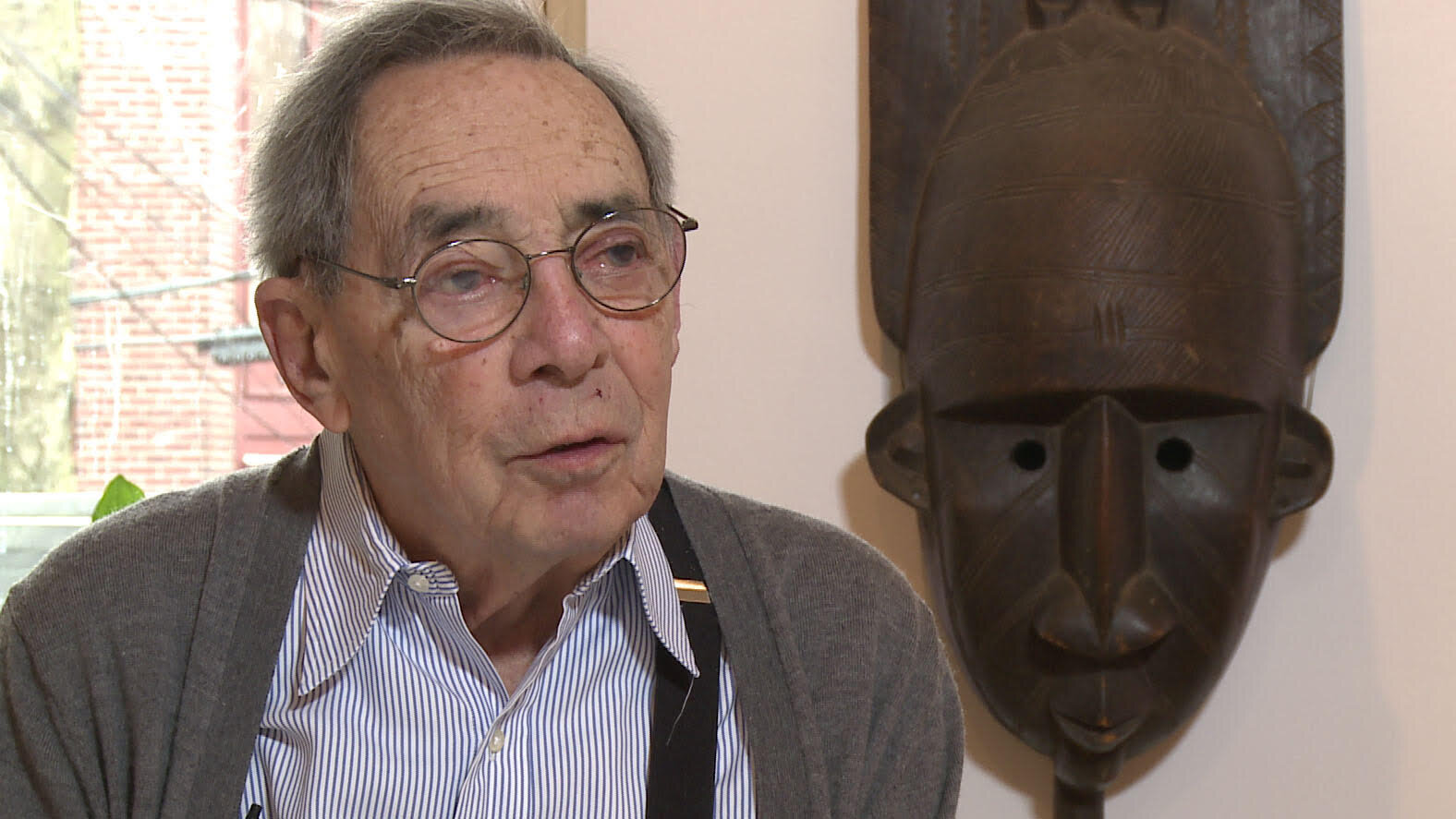
Herman J. Geiger was an American physician who had a lifelong commitment to civil and human rights, which propelled him to conceive of community health centers. Library of Congress
Mississippi receives 43% of its budget from the federal government — more than any other state. Yet it remains perennially at the bottom of the 50 in health. The COVID-19 pandemic has highlighted the fact that health disparities remain pervasive and shocking. (See Jerry Mitchell’s report on the state of the Mississippi Band of Choctaw Indians.)
By 1964, only 25 or fewer practicing Black physicians remained in Mississippi — White mobs had driven some out of Indianola, Meridian and Laurel — and even fewer White doctors were willing to treat Black patients, according to The Racial Divide in American Medicine: Black Physicians and the Struggle for Justice in Health Care, edited and co-authored by Dr. Richard D. deShazo. Black doctors were acutely aware of the ways segregation, discrimination, poverty, lack of education and access to health care deteriorated their patients’ health. Many Black farmworkers in the Mississippi Delta had been displaced by farm equipment and were starving, along with their families. Relying on folk remedies and lay midwives, they were in worse health than many of their enslaved forebears had been.
Robert F. Kennedy’s visit to the Delta spurred a series of tours and reports by physicians groups. They found evidence that state leaders planned to starve unemployed farmworkers to force them to leave Mississippi.
Geiger persuaded a philanthropist to fund a small health clinic in Holmes County, the poorest county in the poorest state. This clinic, in Milestone, was a success, but Geiger realized it couldn’t be replicated, because he’d have to “go out and find philanthropists for every clinic.”
In 1955, as a medical student, Geiger had studied under two young physicians in apartheid South Africa, who were conducting a health care experiment. The South Africans had developed what they called “community-oriented primary care” and had applied it in two clinics serving Blacks, one in an urban housing project and the other on a rural tribal reserve. “Everyone in these defined areas was considered a patient,” deShazo’s book reports. “Staff members collected information about health problems and developed a comprehensive plan of attack, including health services, nutrition programs, preventative medicine and even environmental interventions. Once he made this connection, Geiger had an epiphany of sorts. ‘A good Northern medical school ought to come down to the Delta and run a comprehensive teaching center, properly funded and the whole works -- health, community organization and social change.’”
The first two centers opened in the mid-1960s as models, the first near an urban housing project in Boston, and the second in a rural center “in a Southern state” — Geiger and the other members of the founding committee wanted to disguise the location they had chosen from Mississippi’s segregationists in Congress. The committee had chosen Mound Bayou because of the town’s connection to Black history -- it was a prosperous Black center after the Civil War, founded by two literate freed slaves who grew up in Jefferson Davis and his brother’s households. Mound Bayou also had a long involvement in fighting for civil rights and a Black medical establishment.
Southern members of Congress had stipulated that a governor could not veto federal funding for community health centers affiliated with an academic health center. With help from two other physicians, Geiger arranged for Mound Bayou Community Health Center’s affiliation with Tufts University Medical Center in Boston, just like the Boston center. So the first rural community health center in the U.S. opened in a Mound Bayou church parsonage in 1967. The next year, Geiger recruited a Black woman doctor, Helen Barnes, born in Jackson, as full-time obstetrician-gynecologist and head of a program for maternal and infant care.
The Tufts-Delta Health Center not only treated sick patients, but worked to secure them safe water, plumbing, sewage and vaccines. Community health centers, deShazo’s book says, “gave operational structure to President (Lyndon) Johnson’s War on Poverty.” Although Mississippi’s governor tried to veto funding for a second center, Jackson-Hinds Community Health Center opened in Jackson in 1970.
Jack Geiger died at the end of December 2020. They say the good die young, but he was 95 and working to the end. The Mound Bayou center, called Delta Health today, is still going strong. So is Jackson-Hinds Community Health Center. RIP, Jack.
Ann Marie Cunningham is a Columbia University Lipman Fellow for 2020 who will be working with the Mississippi Center for investigative Reporting. She is a veteran journalist/producer and author of a best-seller. Her work has appeared in The New York Times, Los Angeles Times, Technology Review, The Nation and The New Republic. Contact her at [email protected].